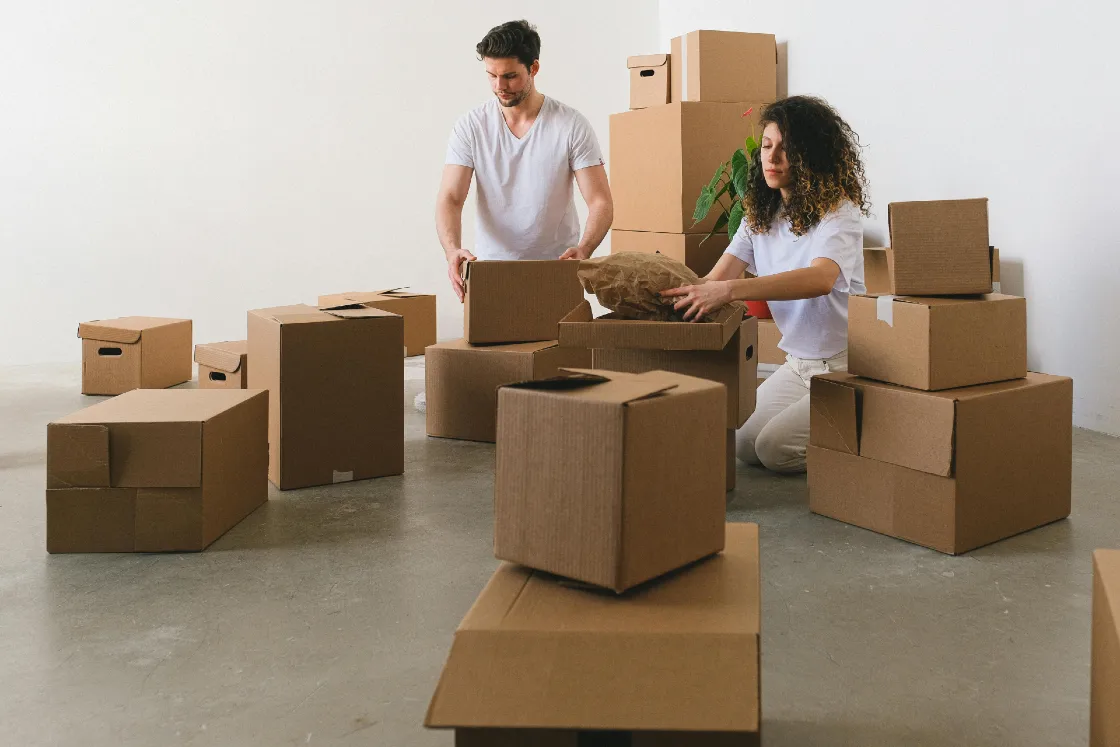
Getting ready to move into a new home can bring feelings of excitement and happiness; but packing can be stressful. Figuring out where to begin, knowing what to pack, and which room to start with can be overwhelming. So, check these top packing tips along with a room by room packing checklist to ensure a smooth move.
Selecting Your Packing Materials
When packing for moving house, you need to choose the right packing materials in order to keep your belongings safe during the move:
- Pack Boxes: Essential for organizing items for a smooth move.
- Marker Pens: Crucial for labeling boxes for easy sorting on arrival.
- Packing Tape: Keeps items secure during transport, preventing accidents.
- Plastic Bags: Ideal for loose items or extra protection for fragile objects.
- Scissors/Knife: Needed for opening boxes and cutting materials.
- Bubble Wrap/Newspaper: Protects fragile items from damage.
- Blankets: Protect large items like furniture or electronics.
- Handcart: Moves heavy items easily, prevents strain.
Essential Tips for Moving And Packing
- Gather boxes and materials: Start by collecting all boxes and packing supplies needed.
- Pack non-essential items first: Begin with seasonal and decorative items you won’t need immediately.
- Label boxes by contents and room: Mark each box with its contents and the room it goes in for easy unpacking.
- Group similar items: Pack alike items together to facilitate unpacking and protect fragile items.
- Color-code boxes for each room: Use colored stickers or markers for easy room identification.
- Load large items first: Put furniture, appliances, and big items in the moving truck first for stability.
- Allow extra packing time: Give yourself more time to pack to reduce stress and ensure everything is ready.
Room by Room Moving Checklist
Moving? Tackle it room by room to make it less daunting. Use our moving house checklist to stay organized. We cover every room – kitchen to bedroom – with packing tips for moving house.
Packing Your Bedroom
- Use wardrobe boxes for clothes on hangers to prevent wrinkles.
- Secure valuable jewelry in a safe case for personal oversight.
- Prevent necklace tangles by threading them through straws or toilet paper rolls; secure earrings with buttons.
- Pack accessories, small electronics, and documents in luggage or suitcases.
- Keep shoes in original or padded boxes to maintain shape.
- Protect mattresses and furniture with old sheets and blankets.
- Store bedding, pillows, and linen in trash bags inside labeled boxes for easy access.
Packing a Home Office
- Pack electronics, paperwork, and stationery with care.
- Don’t overpack boxes to avoid injuries and move easily.
- Color-code electronics wires before taking apart to simplify reassembly.
- Store important documents in a secure, accessible box.
- Photograph electronic setups before disassembly for easy setup later.
- These steps ensure a quick home office setup in your new space.
Packing a Living or Family Room
- Remove lamp bulbs and shades, wrap individually.
- Carry irreplaceable family photos or videos.
- Wrap mirrors and paintings with blankets and towels for protection.
- Cross tape glass on mirrors or pictures for extra safety.
- Pack electronics in original boxes for optimal protection.
- Donate unopened food and discard open packages.
- Clean and dry appliances to prevent mold.
- Secure appliance cords inside to prevent tangles.
- Use original boxes for appliances when possible.
- Clearly label boxes with breakables for careful handling.
- Place bubble wrap or packing paper between dishes, pack vertically to minimize breakage.
Packing a Dining Room
- Line boxes in which you will pack the kitchen items and kitchen appliances with towels, newspaper, cardboard, or linens to protect breakables.
- Roll up rugs and secure them with plastic ties or rope for easy transport and to prevent damage.
Packing a Bathroom
- Pack bathroom essentials last.
- Put toiletries in plastic bags to avoid leaks.
- Pack and label medications separately.
Packing Patio Furniture and Items From the Garage
- Remove all charcoal, burnt wood, or propane tanks to avoid hazards.
- Clean furniture thoroughly to avoid transferring dirt. Disassemble large pieces for easier transport.
- Keep a separate toolbox for moving. Pack tools last for easy access.
- Cover sharp tools or equipment to prevent injuries.
- Recycle light bulbs and batteries from items not moving with you.
Packing Your Valuables When Moving
Packing your valuables requires a strategic approach to ensure they arrive safely at your new home. Here are some moving and packing tips for various types of valuables:
Jewellery
To pack jewelry safely:
- Use egg cartons or pill organizers for small items and tape them shut.
- Wrap necklaces in plastic wrap to prevent tangling.
- Wrap valuable pieces individually in soft cloth or pouches, then box them.
- Use a jewelry roll for organized, tangle-free storage.
- Carry valuable jewelry with you in a secure box or case.
Antiques
To pack antiques safely:
- Inventory and document each item, noting pre-existing damage and take photos.
- Use quality packing supplies like acid-free tissue, bubble wrap, and sturdy moving boxes to prevent damage.
- For valuable or fragile pieces, use custom wooden crates for ultimate protection.
- Clearly label boxes as “Fragile” and include content descriptions.
- Consult professionals for packing high-value items or if unsure.
- Ensure antiques are insured for the move for protection against damage.
Electrical goods
When packing electrical goods for a move, ensure they’re handled carefully to keep them in working order. Follow these steps:
- Pack items in their original packaging for optimal protection.
- Back up data on computers, tablets, or smartphones to avoid losing important files.
- Remove, label, or color-code all cables for easy setup later.
- Wrap sensitive electronics in anti-static bubble wrap to prevent static damage.
- Fill box gaps with soft materials like bubble wrap to stop items from moving in transit.
- Be aware of climate changes during the move and use silica gel packets for moisture.
- Clearly label boxes as “Fragile” and indicate if they need upright handling. Inform movers about these items for extra care.
Important documents
When moving, keep important documents safe and accessible. These include passports, certificates, lease agreements, and financial records. Here’s how:
- Organize: Gather and sort all documents by type, like ID, insurance, medical, and financial.
- File: Use a portable box or binder with labels for easy access.
- Protect: Use waterproof and fireproof containers for safety.
- Carry: Keep documents on you during the move to avoid loss or damage.
- Backup: Make digital copies and store them securely online or on a flash drive.
Moving home kit
A “Moving Home Kit” should have:
- Basic tools: Screwdrivers, hammer, nails, hooks for assembling furniture and hanging items.
- Cleaning supplies: Cleaning products, garbage bags, paper towels, small vacuum or broom for initial clean-up.
- First aid kit: Bandages, antiseptic wipes, pain relievers, personal medication for accidents.
- Essential toiletries: Toothbrushes, toothpaste, shampoo, soap, toilet paper for immediate hygiene needs.
- Snacks and drinks: Non-perishable snacks, water, instant coffee or tea for energy.
- Chargers for electronics: Chargers for phone, laptop, other devices to stay connected.
- Dishes and utensils: A few dishes, cups, utensils for meals without unpacking everything.
- Clothes and bedding: Change of clothes, basic bedding for the first night without unpacking everything.
FAQs
How soon should you start packing for a move?
Start packing 4-6 weeks before moving to sort belongings, decide what to keep or donate, and avoid last-minute stress. Early packing allows time to get supplies and ensure items are protected. Starting early makes moving smoother.
What is the best thing to pack first when moving?
Start packing with items you rarely use, like holiday decorations, seasonal clothes, and sports gear. Then pack non-essential items and rarely used rooms like guest bedrooms and formal dining rooms. Packing these first clears space and minimizes disruption before moving.
What is the hardest room to pack when moving?
Packing the kitchen is challenging because of its mix of fragile, bulky, and sharp items. Use different packing strategies for safety. Pack least used items first and use special materials for fragile items to avoid breakage. Pack the kitchen last to keep it functional until moving day.